Pick Order Dynamics Driving Gold Lead Patterns in Elite Dota 2 Series
Casey Beck · Oct 4, 2026
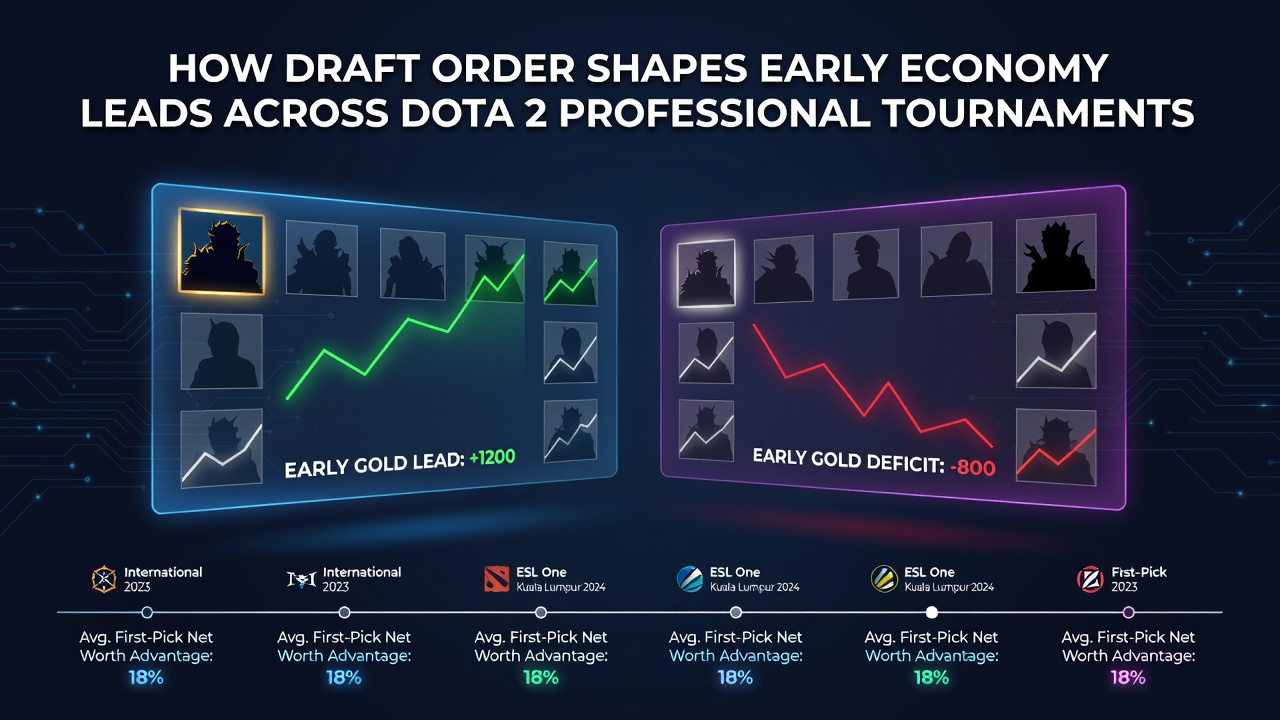
Pick Order Dynamics Driving Gold Lead Patterns in Elite Dota 2 Series
Draft Mechanics and Resource Allocation in Pro Play
Professional Dota 2 matches begin with a structured drafting phase where teams alternate selections and bans across multiple rounds, and this sequence directly influences which heroes secure favorable lanes while denying opponents similar advantages. Teams that pick early often secure core farming heroes capable of accelerating gold accumulation through efficient creep waves and jungle camps, whereas later picks tend to focus on supports or situational counters that shape the pace of early skirmishes. Data from major circuits shows that first-phase picks correlate with measurable edges in net worth during the initial ten minutes, especially when those heroes enable uncontested lane control and faster item timings.
Observers tracking tournaments note how radiant and dire sides experience different constraints based on draft position, since the side choice itself stems from the coin toss or prior series results yet still interacts with hero availability. When a team locks in an aggressive offlaner or midlaner in the opening slots, it frequently translates into faster rotations and higher gold from kills or assists before the ten-minute mark. Conversely, teams forced into reactive picks later in the draft often struggle to match the same farming efficiency, leading to deficits that compound if the opposing side maintains map control.
Laning Efficiency and Early Gold Disparities
Heroes selected in the first two phases commonly dictate lane matchups, and analysts reviewing replay data find that favorable matchups produce consistent last-hit advantages that convert directly into item leads. A carry picked early might pair with a support that zones effectively, allowing the core to claim both ranged and melee creeps at higher rates while the enemy falls behind on experience and gold. Studies of professional matches indicate that such edges appear most pronounced in the safe lane and mid lane, where minute differences in creep denial and harassment accumulate into hundreds of gold within the first eight minutes.
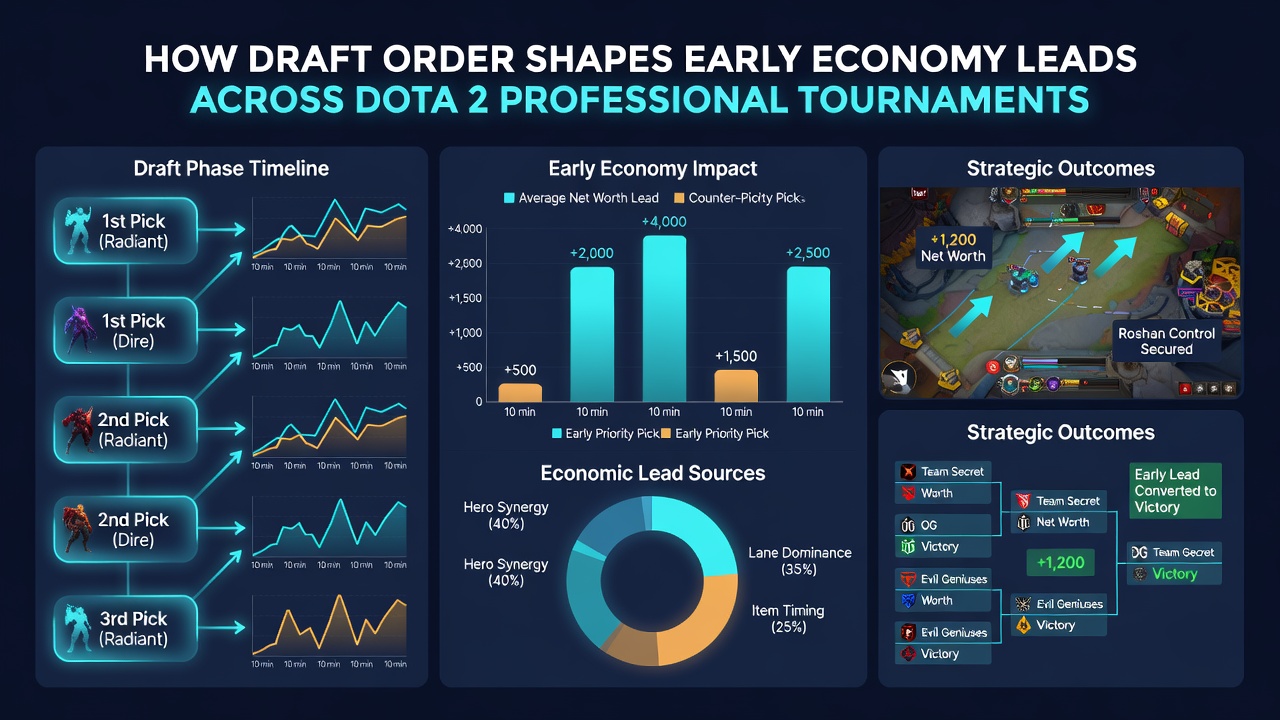
But here's the thing: draft order also affects how teams allocate their banned heroes, which removes certain counters and thereby protects the early economy strategies of the first-picking side. When strong laning heroes remain available for the opening selections, teams exploit this by building lineups that pressure multiple lanes simultaneously, forcing the opponent to respond rather than farm freely. Tournament statistics compiled through October 2026 reveal that squads entering the draft with priority on farming cores posted average gold leads of 1,200 to 1,800 at the ten-minute timestamp across several regional leagues.
Statistical Patterns Across Recent Circuits
Records from the Dota Pro Circuit and associated majors demonstrate that pick order influences extend beyond individual lanes into team-wide resource distribution, with first-pick teams recording higher rates of tower damage and neutral item acquisition before the mid-game transition. Researchers examining aggregated match logs note that when teams secure two farming heroes in the initial phases, their combined gold per minute rises measurably compared to lineups assembled later in the draft. These patterns hold across both European and North American events, although regional variations appear in how supports adapt to the resulting deficits.
One study compiled by tournament organizers tracked over 400 professional games and found correlations between early pick priority and the frequency of successful invade attempts on enemy jungle areas, which further widens economy gaps. Teams drafting around mobile initiators in the second phase often convert those selections into kill bounties that supplement standard farming routes, creating compounding advantages that persist into the fifteen-minute window. Data indicates these dynamics remain consistent even as patches alter hero balance, suggesting the structural impact of draft sequencing outweighs specific hero tweaks in many cases.
Case Examples from 2026 Tournaments
During the fall circuit events leading into October 2026, several series illustrated how draft order translated into tangible early leads. Squads that opened with versatile cores paired with zoning supports frequently established 800-plus gold advantages by the eight-minute mark, enabling quicker purchases of key items such as boots upgrades and damage components. Opposing teams responding with later picks often shifted toward defensive postures, trading farm for map vision yet still trailing in overall resources.
Additional examples from Southeast Asian qualifiers showed similar trends, where first-phase selections of scaling midlaners allowed teams to dominate rune control and thereby accelerate both gold and experience curves. These outcomes align with broader observations that draft position serves as a foundational variable in professional play, one that teams prepare for through extensive scouting and simulation of opposing strategies.
Conclusion
Overall patterns confirm that draft sequencing shapes early economy leads through its control over hero availability, lane matchups, and initial map pressure across Dota 2 professional tournaments. Teams leveraging early picks consistently post higher resource totals in the opening stages, while later selections require precise execution to mitigate resulting disadvantages. Continued analysis of match data from circuits worldwide provides ongoing insight into these interactions as the competitive landscape evolves through late 2026.