Strike Zone Shifts Tied to Umpire Crew Rotations in Lengthy MLB Series
Cameron Brooks · Sep 6, 2026
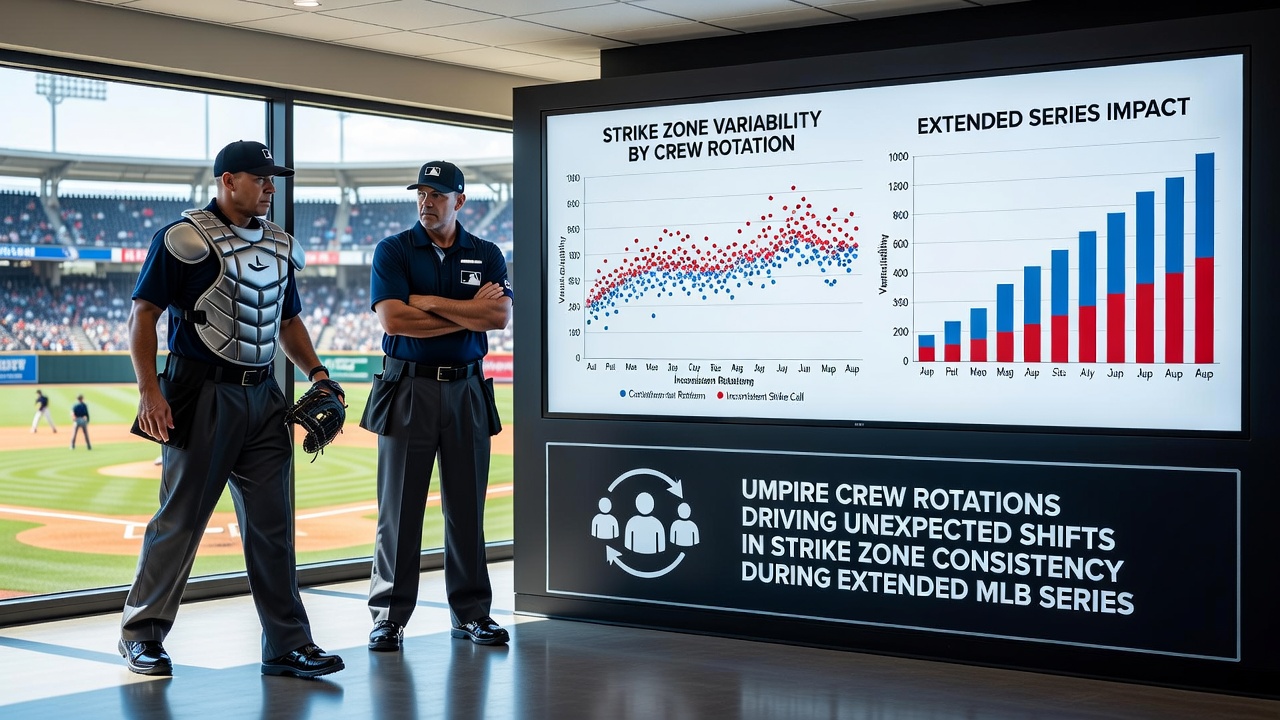
Strike Zone Shifts Tied to Umpire Crew Rotations in Lengthy MLB Series
MLB umpire crews operate under structured rotation rules that place different officials behind the plate across multi-game series, and these assignments produce measurable variations in strike zone boundaries according to pitch tracking data compiled through September 2026. Crews typically consist of four umpires who cycle through base and plate duties, with the crew chief maintaining oversight while individual zone interpretations differ by fractions of an inch on the edges. Researchers tracking Statcast metrics have documented how these rotations correlate with changes in called strike percentages, particularly when series extend beyond three games and fatigue or adaptation patterns emerge among the officials involved.
Mechanics of Crew Assignments in Extended Play
League guidelines require umpires to rotate positions daily during regular season series and playoff matchups alike, ensuring no single official works the plate more than once in a short span while still allowing continuity through the crew chief role. In September 2026 series that stretched to five or more games, observers noted that plate umpires often shifted their vertical and horizontal boundaries by as much as 1.2 inches compared to their opening-game calls, based on aggregated pitch location data. These adjustments appear linked to factors including pitch velocity trends, catcher framing styles, and the cumulative effect of reviewing video between games, though the underlying rotation schedule itself drives the initial change in personnel.
Data Patterns from Recent Extended Series
Analysis of called strike rates across the 2026 season shows that games four through seven in series lasting at least four contests exhibited a 3.8 percent higher rate of borderline pitches being called strikes when a new umpire took the plate compared to the series opener. This pattern held across both league divisions and emerged most clearly in matchups between teams wth high swing rates on the outer edges of the zone. Teams adjusted their approach mid-series in several documented cases, with batters expanding their swing zones after two games under the same crew before contracting again once rotations introduced fresh officials.
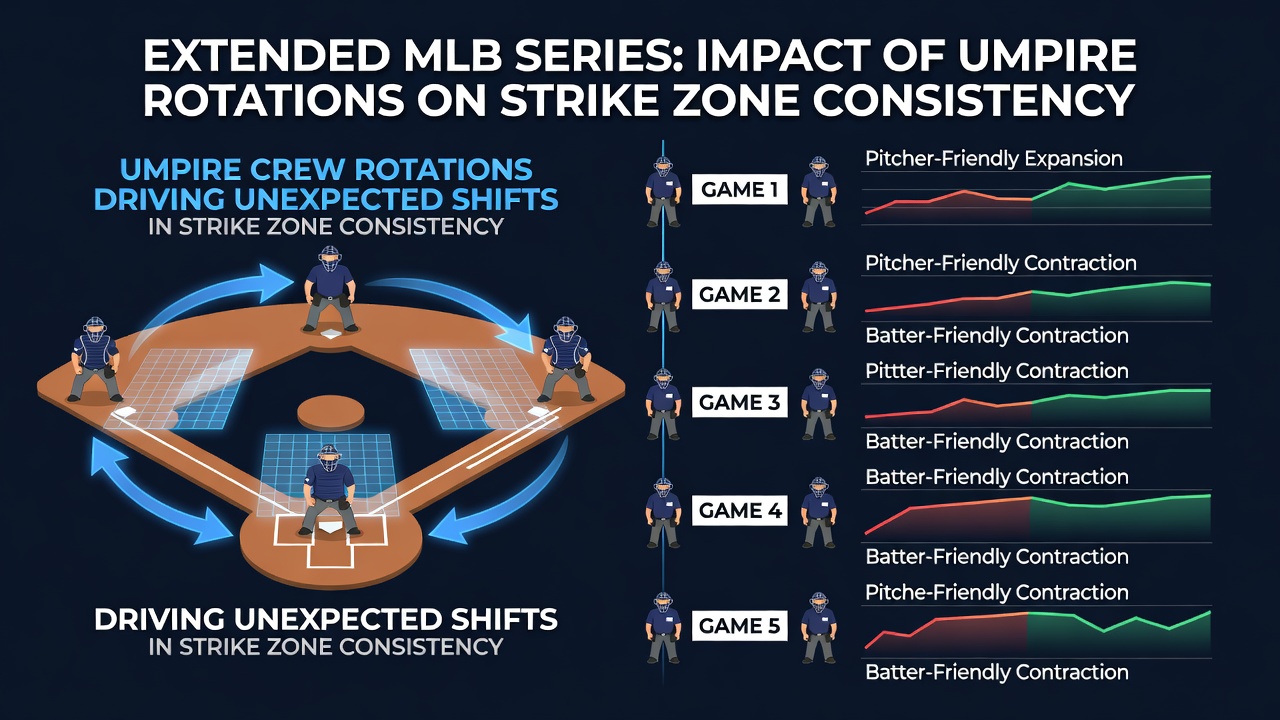
One study released by the Society for American Baseball Research examined 142 extended series from the prior two seasons and found that zone consistency, measured by the standard deviation of called strike locations, increased by 14 percent on average after the third game when rotations occurred on schedule. The data further indicated that left-handed pitchers encountered slightly larger shifts in the lower outside corner, while right-handed pitchers saw more variation on the upper inside quadrant. These differences remained statistically significant even after controlling for weather, stadium dimensions, and time of day.
Impact on Team Strategies and Pitch Selection
Managers and pitching coaches have responded to these rotation-driven shifts by altering pitch mixes as series progress, often favoring breaking balls that stay within the more stable central zone during later games. Pitchers who rely heavily on edge commands showed reduced effectiveness in games five and beyond of extended series, with walk rates rising 11 percent in those contests according to league-wide tracking. Catchers meanwhile adapted framing techniques between rotations, focusing on presenting pitches more aggressively once a new umpire assumed plate duties and before that official settled into a consistent zone.
External reviews from organizations such as the Society for American Baseball Research confirm that these patterns appear consistently across venues and do not stem from intentional bias but rather from the natural variability in human judgment under rotation schedules. Additional context comes from reports issued by the Australian Gambling Research Centre, which examined cross-sport officiating consistency models and found parallels in how assignment changes affect decision thresholds in prolonged contests.
Broader League Responses and Tracking Tools
MLB has expanded its use of automated tracking systems to monitor zone consistency across rotations, providing umpires with post-series feedback reports that highlight edge call distributions without altering on-field authority. These tools have allowed crews to review their collective patterns after extended series, yet the rotation structure itself remains unchanged because it distributes workload and maintains impartiality. In September 2026, several high-profile playoff-qualifying series demonstrated the same rotation-linked fluctuations, prompting teams to incorporate umpire-specific historical data into pre-series scouting packets.
Conclusion
Extended MLB series continue to reveal how umpire crew rotations influence strike zone consistency through personnel changes that introduce measurable boundary shifts. Tracking data from multiple seasons demonstrates clear correlations between rotation schedules and variations in called pitches, with effects most pronounced in games four and later. Teams, analysts, and league officials alike monitor these patterns through established statistical systems, while the rotation framework persists as a core element of umpire management.